
When to Replace Walking Shoes: Check Wear, Grip and Fit
The useful life of a walking shoe is easier to judge by its condition than by its age. A pair may still look tidy while its cushioning feels flat; another may remain comfortable but have a smooth, unreliable outsole.…
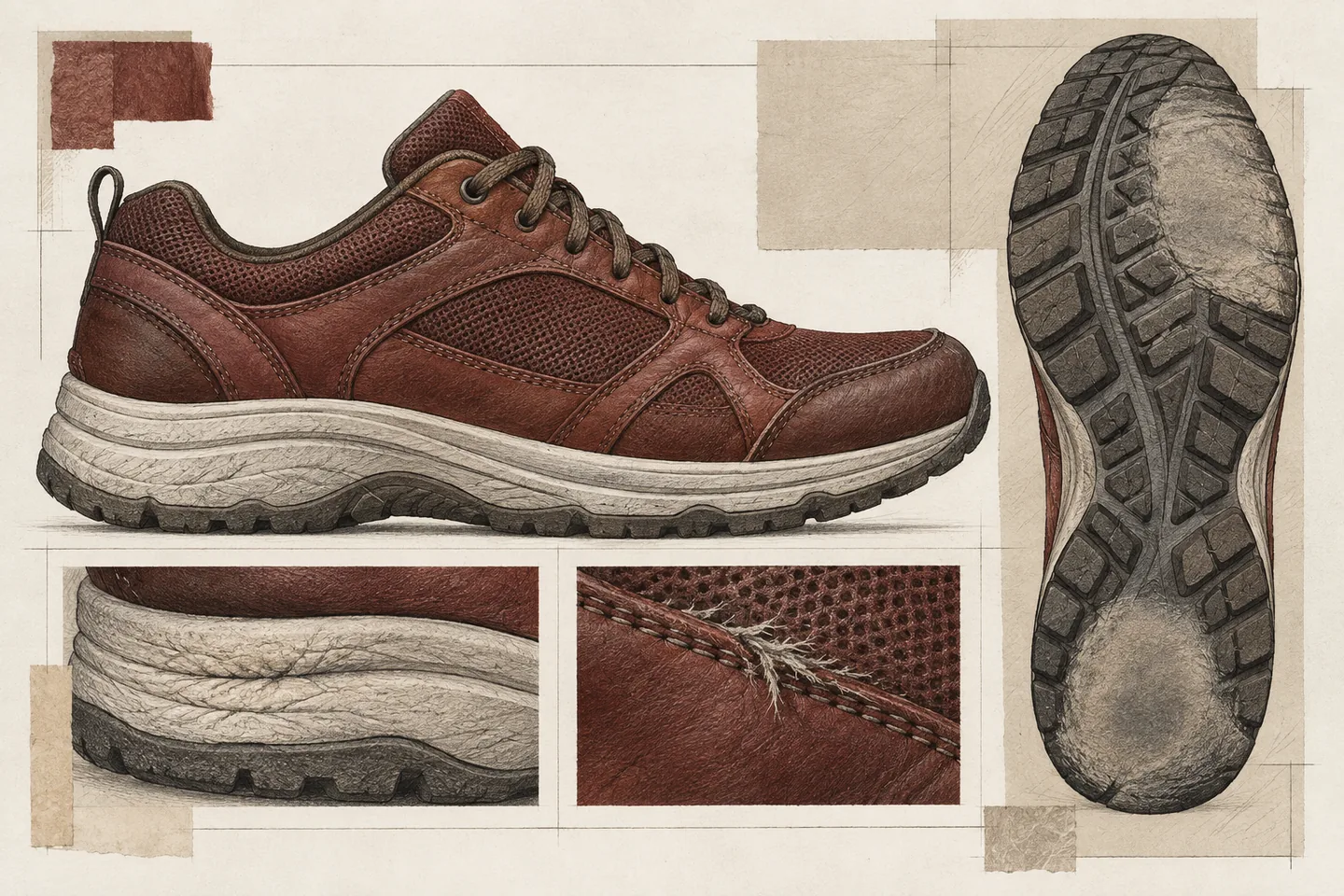
The useful life of a walking shoe is easier to judge by its condition than by its age. A pair may still look tidy while its cushioning feels flat; another may remain comfortable but have a smooth, unreliable outsole. The question is whether the shoes still provide the grip, fit and comfort you need on the surfaces you actually walk.
Inspect three parts separately: the outsole beneath your foot, the cushioning between that sole and your foot, and the upper that holds the shoe in place. Then compare how the pair feels with shoes you know fit well. Mileage can prompt an inspection, but it cannot settle the decision on its own.
Start with the outsole and its grip
Turn both shoes over and look at the tread in good light. Pay particular attention to the heel and forefoot, where repeated contact may smooth the pattern. Compare the left shoe with the right, and compare each worn area with a part of the same sole that sees less contact. Dirt can hide the pattern, so brush it away before deciding how much tread remains.
A worn patch matters most when it changes how the shoe meets the ground. Look for an edge worn noticeably lower than the other side, a heel that no longer sits evenly, or a section where the tread has become smooth. REI advises checking for heel damage and worn soles when assessing running shoes. The same visible clues make a useful starting point for inspecting shoes used for walking, though the decision still depends on the shoe and its use.
Think about the routes you take. A smooth patch may be easy to overlook on a dry indoor floor and much more consequential on damp pavement, loose gravel or a sloping path. If a shoe slips where it used to feel secure, inspect the sole promptly. Do not test a doubtful pair by deliberately walking on a hazardous surface. Loss of dependable grip is a reason to stop using the shoes for that route, even if the uppers still look sound.
Check cushioning without judging it by appearance alone
Next, look at the midsole—the layer that often provides much of a walking shoe’s cushioning. Examine both shoes from the side for areas that appear permanently compressed, uneven or distorted. Set the pair on a level surface and see whether one shoe leans or rocks in a way it did not before. These observations are clues, not a laboratory test: a crease in foam by itself does not prove that the shoe has reached the end of its useful life.
Feel matters here. During an ordinary walk, notice whether the shoes now seem unusually hard, flat or unstable underfoot. Has a familiar route begun to feel less comfortable without a clear change in pace, distance or surface? Brooks identifies compressed midsoles and reduced comfort or support among the signs to check when assessing its footwear. That guidance is more useful as a prompt to inspect your own pair than as proof that every change in sensation has one cause.
Keep the insole and midsole distinct in your assessment. A removable insole may have a flattened surface or a worn covering, while the cushioning built into the shoe may also have changed. Replacing an insole can alter how a shoe feels, but it cannot restore a damaged outsole or necessarily reverse wear in the midsole. Review the whole shoe before deciding that a fresh insert has solved the problem.
Inspect the upper and the way the shoe holds your foot
The upper can wear out while the sole still has tread. Look inside the heel for a lining rubbed through to a rough edge. Check the toe box for holes, thinning fabric or a shape that has stretched out of place. Examine seams, lace holes and fastening points. A loose thread on its own may be minor; a tear that grows with each walk or lets the shoe shift on your foot deserves more attention.
Put the shoes on with the socks you normally wear. Lace or fasten them as usual, then walk on a clean, level surface. Your heel should feel secure, your toes should have comfortable room, and the upper should not create a new pressure point. Brooks includes tears and excessive fraying in the upper in its list of replacement clues. An upper that no longer holds the foot comfortably may be a problem even before a hole appears.
Some fit changes have little to do with wear. A different sock, a change in lacing or a foot that is swollen after a long day can alter how a familiar pair feels. Check those simple possibilities, but do not keep tightening a shoe to compensate for a heel that repeatedly slips or for an upper that has lost its shape. The aim is a secure, comfortable fit, not merely a shoe that can be made to stay on.
Compare the pair with a known-good reference
Wear can arrive gradually enough that one walk feels much like the next. A direct comparison helps. If you have another pair that fits well and is suited to the same kind of walking, try both pairs indoors with the same socks. Walk a short, familiar stretch in each. Notice the heel hold, pressure across the forefoot, underfoot feel and confidence when turning. Compare one feature at a time rather than asking only which pair feels “better.”
A newer pair of the same model may offer a particularly clear reference, but it is not essential. Models can also change between purchases, so a difference does not automatically prove that the older shoes are worn out. The comparison is useful because it gives your impression a reference point. If the older pair consistently feels flatter, less secure or less comfortable, return to the outsole, midsole and upper to see which part explains the change.
Use mileage as context, not a universal deadline
Distance is worth recording if you already track your walks. It tells you roughly how much use a pair has had and reminds you to inspect shoes that still look presentable. Count the walking and everyday wear the shoes actually receive, not just outings labelled as exercise. A pair used for errands, commuting and long periods on your feet may see more use than a walking log suggests.
Published mileage guidance varies and often concerns running shoes rather than every type of walking shoe. The American Podiatric Medical Association gives broad replacement guidance for running shoes used for running or walking, while Brooks discusses its performance footwear and notes that daily walking or work use can affect how its materials wear. Neither statement establishes an exact lifespan for every shoe or walker. Construction, surfaces, frequency of use and the condition of the individual pair all matter.
Take new discomfort seriously without diagnosing it from the shoe
A change in footwear comfort can be useful information. Note where discomfort occurs, when it begins and whether it appears in one pair or several. New rubbing may point you toward a worn heel lining or a changed fit; a flat feeling underfoot may prompt a closer look at the cushioning. Shoes are only one possible factor, however. A change in activity, an injury or a foot problem may produce similar complaints.
If pain persists, worsens or interferes with normal walking, seek advice from a qualified health professional instead of assuming that replacement shoes will fix it. The NHS advises getting medical help for foot pain that worsens, keeps returning or limits normal activity, and identifies other symptoms that call for assessment. Bring the shoes you have been wearing if that helps explain when the problem occurs.
Make the replacement decision
After the inspection, ask three practical questions. Does the outsole still provide dependable grip on your usual surfaces? Does the shoe still feel comfortable and stable underfoot? Does the upper hold your foot securely without new rubbing or pressure? A clear failure in any one area can make a pair unsuitable for regular walking, even when the other parts appear usable.
Minor cosmetic wear is different from a loss of function. Scuffed fabric or a dirty sole may need cleaning rather than replacement. A small repair may be possible for some constructions, but assess whether it restores the part that matters: fastening, fit or grip. If the tread is substantially worn, the cushioning feels persistently flat, or the upper no longer holds your foot, plan for another pair suited to your walking conditions.